If you crave a sweet treat that transports you straight to Thailand, you’ve found it! Thai Mango Sticky Rice is a delightful dessert that shines with simple ingredients and flavors. In this article, I’ll guide you through the easy steps to create this creamy and fruity dish that will impress everyone. Let’s dive into the world of tropical delights and make your taste buds dance!
Why I Love This Recipe
- Unique Flavor Combination: This dish perfectly balances the sweetness of ripe mangoes with the creamy, rich coconut sticky rice.
- Easy to Make: With simple ingredients and straightforward steps, anyone can create this delightful dessert at home.
- Beautiful Presentation: The vibrant colors of the mango and the glossy coconut rice make for an eye-catching dish that impresses guests.
- Versatile Dessert: This recipe can be enjoyed as a light snack, a dessert, or even a festive treat for special occasions.
Ingredients
List of Essential Ingredients
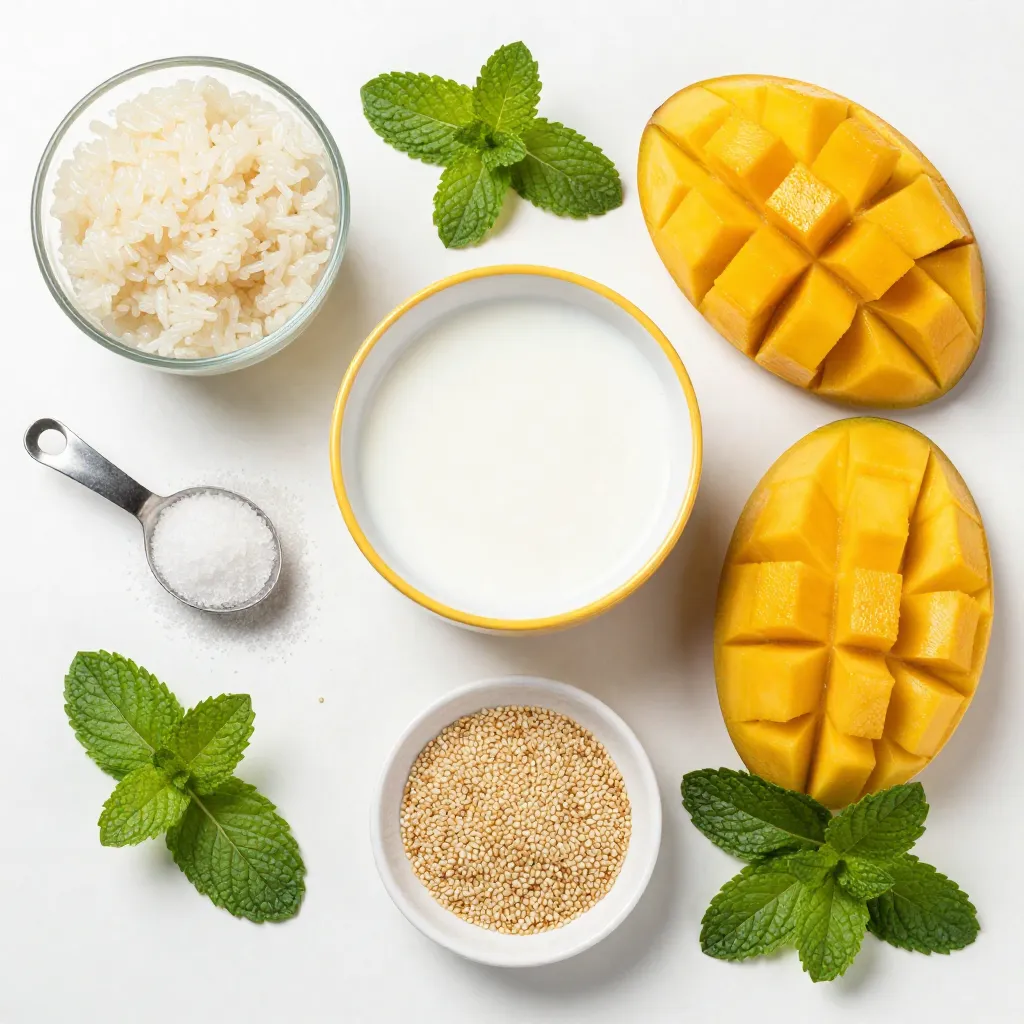
– 1 cup sticky rice (glutinous rice)
– 1 ½ cups coconut milk
– ½ cup sugar
– ½ teaspoon salt
– 2 ripe mangoes, peeled and thinly sliced
– 1 tablespoon sesame seeds (optional, for garnish)
– 2 tablespoons fresh mint or cilantro, finely chopped (optional, for garnish)
For this delightful dessert, you need a few simple yet key ingredients. Sticky rice is the base, giving the dish its unique texture. Coconut milk adds creaminess and sweet flavor. Sugar and salt enhance the taste, while ripe mangoes bring freshness. You can choose to garnish with sesame seeds or herbs like mint for extra flair. Each ingredient plays a vital role, making the dish truly special.
Step-by-Step Instructions
How to Prepare and Soak Sticky Rice
First, rinse the sticky rice under cold water. Use a fine mesh strainer to make this easy. Keep rinsing until the water runs clear. This step removes excess starch.
After rinsing, soak the rice in a large bowl. Fill the bowl with water and cover the rice. Soak it for at least 4 hours. If you want the best texture, let it soak overnight.
Steaming the Sticky Rice
Next, set up your steamer. Line the basket with cheesecloth or a clean towel. Drain the soaked rice and pour it into the basket.
Place the steamer over a pot of boiling water. Steam the rice for about 25 to 30 minutes. You will know it’s done when it looks tender and shiny.
Making the Coconut Sauce
While the rice steams, prepare the coconut sauce. In a medium saucepan, mix coconut milk, sugar, and salt.
Heat the mixture over medium heat. Stir gently until the sugar dissolves. Be careful not to let it boil. Reserve about ½ cup of this sauce for later.
Combining Rice and Coconut Sauce
Once the rice is steamed, transfer it to a large bowl. Pour the remaining coconut sauce over the hot rice.
Gently stir to coat the rice evenly. Let it sit for 20 to 30 minutes. This allows the rice to soak up all the coconut flavor.
Assembling the Dish
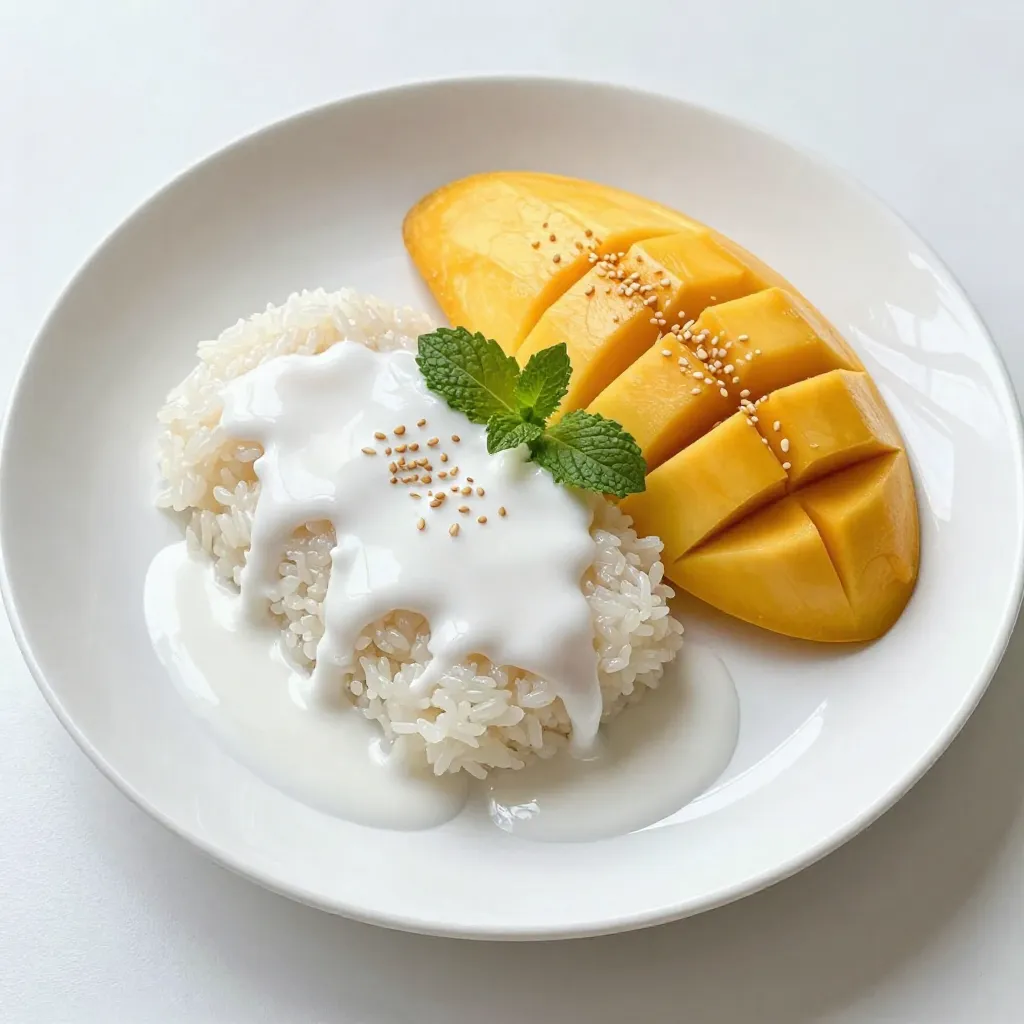
To assemble your dish, scoop sticky rice onto serving plates. Place sliced mangoes next to the rice for a colorful look.
Drizzle the reserved coconut sauce over both the rice and mango. For a nice finish, sprinkle sesame seeds on the rice. You can also add fresh mint or cilantro for a burst of color and flavor.
Tips & Tricks
Selecting the Best Ingredients
Choosing ripe mangoes is key. Look for mangoes that feel soft but not mushy. They should have a sweet aroma. The best mangoes for this dish are the Nam Dok Mai or Ataulfo types. Their sweetness balances the creamy sticky rice.
Now, let’s talk about sticky rice and coconut milk. Use high-quality sticky rice for the best texture. It should be glutinous, which makes it chewy. For coconut milk, pick a brand without additives. This ensures rich flavor and creaminess.
Cooking Time Adjustments
Cooking time can change based on your equipment. If you use a bamboo steamer, it may need extra time. Keep an eye on the rice. It should be tender and clear when done. If you’re using a rice cooker, check its settings. Some cookers have a glutinous rice option.
For steaming, use a pot with a tight lid. This keeps steam in, cooking the rice evenly. If you don’t have a steamer, you can use a heatproof bowl. Just make sure it fits in your pot and is covered well.
Serving Suggestions
Pair your Thai mango sticky rice with refreshing drinks. Coconut water or iced tea works great. They complement the dish’s sweetness well.
For presentation, think simple yet elegant. Serve in small bowls for an upscale feel. You can also use banana leaves for a fun, tropical touch. Arrange the mango slices neatly next to the rice. Drizzle extra coconut sauce on top for a beautiful finish.
Pro Tips
- Soaking Time Matters: For the best texture, soak the sticky rice overnight. This allows the grains to fully absorb water, resulting in a softer and more tender rice.
- Steaming Technique: Ensure that the water is boiling before you start steaming the rice. This helps achieve a consistent cooking temperature and prevents the rice from becoming gummy.
- Coconut Sauce Consistency: Make sure to stir the coconut milk mixture gently and avoid boiling it. This preserves the creamy texture and prevents separation.
- Garnish for Flavor: Fresh herbs like mint or cilantro add a refreshing contrast to the sweetness of the dish. Don’t skip this step for a burst of flavor!
Variations
Dietary Alternatives
Vegan options
Thai mango sticky rice is already vegan! The main ingredients are sticky rice, coconut milk, and mangoes. You can enjoy it without any animal products. For a creamier texture, use full-fat coconut milk. It adds richness without losing the vegan aspect.
Gluten-free considerations
This dessert is naturally gluten-free. Sticky rice does not contain gluten. You can serve it with confidence to gluten-sensitive guests. Just ensure that your coconut milk and any garnishes are also gluten-free.
Flavor Enhancements
Adding other fruits
Feel free to mix in other fruits! Sliced bananas, strawberries, or even dragon fruit can add a fun twist. These fruits give extra color and flavor. You can create a fruit medley that will wow your guests.
Experimenting with spices
If you want to spice things up, try adding a pinch of cinnamon or cardamom. These spices can enhance the coconut flavor. You can also try a hint of vanilla for a warm touch. Just remember to keep it balanced so the mango shines through.
Different Serving Styles
Individual portions vs. family-style serving
You can serve mango sticky rice in different ways. For individual portions, use small bowls. This makes each serving special. For a family-style serving, place everything on a big platter. Guests can scoop their own portions.
Creative plating ideas
Get creative with your plating! You can use banana leaves for a tropical look. Arrange mango slices in a fan shape beside the rice. Drizzle the coconut sauce artfully for a beautiful finish. Small touches like these make the dish even more inviting.
Storage Info
Storing Leftovers
To store your Thai mango sticky rice, first let it cool completely. This step helps keep moisture in check. Place the sticky rice and mango slices in separate containers. Use airtight containers to keep them fresh.
– Refrigeration techniques: Store your leftovers in the fridge. This keeps them safe and tasty for a few days.
– Best containers for storage: Glass containers or BPA-free plastic containers work well. They help prevent any strong odors from other foods.
Reheating Tips
When you want to enjoy your leftovers, you can easily revive them. Reheat the sticky rice slowly to keep its texture.
– Methods to revive texture and taste: Use a steamer or microwave. If using a microwave, add a splash of coconut milk to keep it moist.
– When to consume leftovers: Try to eat your leftovers within three days for the best flavor. After that, the mango may lose its freshness.
FAQs
How can I make Thai Mango Sticky Rice ahead of time?
You can prepare Thai Mango Sticky Rice a day in advance. Start by soaking the sticky rice overnight. Then, steam it and mix it with coconut sauce. Store it in an airtight container in the fridge. Wait to slice the mangoes until you are ready to serve. This keeps them fresh and bright.
Can I use frozen mangoes for this recipe?
Yes, you can use frozen mangoes. Just make sure to thaw them first. Place them in the fridge overnight or let them sit at room temperature. Frozen mangoes may be softer than fresh ones. They still taste great, but the texture might be different.
What are common mistakes to avoid when making this dessert?
Here are some tips to avoid mistakes:
– Rinse the rice well to remove excess starch. This helps it cook evenly.
– Don’t skip the soaking time; it is key for the right texture.
– Be careful not to boil the coconut sauce. Heat it gently to dissolve sugar.
– Allow the rice to sit after mixing with coconut sauce. This helps it absorb flavors.
Where can I find authentic Thai Mango Sticky Rice?
You can find authentic Thai Mango Sticky Rice at Thai restaurants or markets. Look for places that focus on traditional dishes. Many Thai restaurants offer it as a dessert. You can also check local Asian grocery stores for ingredients if you wish to make it at home.
Thai Mango Sticky Rice is a delicious and simple dessert made with key ingredients like sticky rice, coconut milk, and ripe mangoes. I shared step-by-step instructions to guide you in making it perfectly at home. You also learned tips for ingredient selection, cooking adjustments, and creative serving ideas.
As you explore different variations, remember that this dish is flexible and fun to customize. Enjoy experimenting with flavors and styles, and don’t hesitate to share your results! This dish can bring joy to any meal, so dive in and delight in your creatio